
Product Description
Product Parameters
PRODUCT NAME: Rear Axle Drive Pinion and Gear
| NO. | APPLICABLE VEHICLE | GEAR RATIO | PART NO. | REFERENCE WEIGHT(KG) | |||
| 1 | MITSUBISHI 4D30 | 6/37 | MB005252 | 12.4 | |||
| 2 | MITSUBISHI 4D41 | 7/37 | MB161193 | ||||
| 3 | MITSUBISHI 4D32 | 6/37 | |||||
| 4 | MITSUBISHI 4D34 | 6/37 | MC835191 | 14 | |||
| 5 | MITSUBISHI L300F | 7/37 | MB57164 | 4.18 | |||
| 6 | MITSUBISHI L300P | 7/37 | MB185457 | 4 | |||
| 7 | MITSUBISHI L300D | 7/37 | MB241981 | 6.3 | |||
| 8 | MITSUBISHI 8DC9 | 6/40 | |||||
| 9 | MITSUBISHI 6D22 | 6/45 | 34.50 | ||||
| 10 | MITSUBISHI 6D15 | 6/40 | 29 | ||||
| 11 | TOYOTA 14B | 6/39 | 41201-37499 | 11.4 | |||
| 12 | TOYOTA 2400 | 9/41 | 5 | ||||
| 13 | TOYOTA RINO HT | 7/45 | 18.8 | ||||
| 14 | TOYOTA LAND CRUISER | 9/37 | 7 | ||||
| 15 | TOYOTA COASTER | 7/39 | 8.60 | ||||
| 16 | isu TXD40 | 6/39 | 41211-080 | 19.50 | |||
| 17 | isu TXD50 | 7/39 | 41211-081 | 19 | |||
| 18 | isu BF-40 | 6/39 | 41210-149 | 20 | |||
| 19 | isu NKR | 6/41 | 16 | ||||
| 20 | isu NPR | 7/41 | 10.20 | ||||
| 21 | isu 10PC1 | 6/41 | 34.50 | ||||
| 22 | HINO | 7/46 | 41201-1080 | 24.40 | |||
| 23 | HINO KR | 7/46 | 24.50 | ||||
| 24 | HINO AKBUS/FF | 7/43 | 24.50 | ||||
| 25 | HINO J08C | 7/45 | 35.00 | ||||
| 26 | BEDFORD J6-330 | 6/35 | 7078107 | 14.40 | |||
| 27 | BEDFORD J5-330 | 5/34 | 7167277 | 15.50 | |||
| 28 | BEDFORD | 6/35 | 7167278 | 14.80 | |||
| 29 | BEDFORD | 7/37 | 7165710 | 14.50 | |||
| 30 | BEDFORD | 6/35 | 9157101 | 21.50 | |||
| 31 | BEDFORD | 6/35 | 716571 | 14.20 | |||
| 32 | U.S.A TRACTOR P7102 | 7/43 | |||||
| 33 | U.S.A TRACTOR P7112 | 7/47 | |||||
| 34 | FORD 6600 C5NN-4610E | 7/37 | 1839118/127 | 13.50 | |||
| 35 | FORD 5000 DONN-4610B | 6/37 | 3571152/136 | 14.20 | |||
| 36 | TRACTOR MF-240 | 6/37 | 15.20 | ||||
| 37 | TRACTOR MF-135 | 6/37 | 14.60 | ||||
| 38 | TRACTOR MF-265 | 11/38 | |||||
| 39 | FAIT | 12/47 | 7.40 | ||||
| 40 | FAIT | 14/47 | 7.60 | ||||
| 41 | MAZDA/W015 | 7/46 | 9.70 | ||||
| 42 | SUZUKI ST90 | 7/36 | 2.20 | ||||
| 43 | SUZUKI GAZ | 8/41 | 7.60 | ||||
Features
1.Competitive and reasonable price
2.Long lasting and reliable working life time
3.Premium quality standard guaranteed
4.Standard packing or according customers’ specification required.
5.Short production cycle
6.Quickly delivery and wide varieties
7.Large stock,quick shipment
8.Short production cycle,large stock,quick shipment
9.CZPT to produce according customers’ specification with technical drawing and sample.
10. Material: carbon steel such as C45, 20CrMnTi, 40Cr, 42CrMo or stainless steel or copper or nylon etc.
Our Advantages
ADVANCED EQUIPMENT
America Gleason CZPT Bevel Gear Cutting Machine
America A Group of Gleason
Germany Ipsen Gas-tight Multi-purpose Chamber Furnace
Germany Zeiss Three-coordinate Measuring Machine
America Gleason Bevel Gear Cutting Machine
America Gleason Bevel Gear Lapping Machine
America Gleason Bevel Gear Roll Testing Machine
We can supply more than 2 hundred type of Spiral Taper Gear and pinion which are sold well in both domestic and abroad markets for automobile,tractor,engineering and construction machinery, coal mine machinery,chemical and petroleum machinery.
1.Supply for OEM
2.High quality and reasonable price
3.Material 20Cr MnTi
4.We have quality control system to guarantee best product quality
5.We have professional inspectors.All these inspectors are qualified.
Certifications
What You Should Know About Axle Shafts
There are several things you should know about axle shafts. These include what materials they’re made of, how they’re constructed, and the signs of wear and tear. Read on to learn more about axle shafts and how to properly maintain them. Axle shafts are a crucial part of any vehicle. But how can you tell if 1 is worn out? Here are some tips that can help you determine whether it’s time to replace it.
Materials used for axle shafts
When it comes to materials used in axle shafts, there are 2 common types of materials. One is carbon fiber, which is relatively uncommon for linear applications. Carbon fiber shafting is produced by CZPT(r). The main benefit of carbon fiber shafting is its ultra-low weight. A carbon fiber shaft of 20mm diameter weighs just 0.17kg, as opposed to 2.46kg for a steel shaft of the same size.
The other type of material used in axle shafts is forged steel. This material is strong, but it is difficult to machine. The resulting material has residual stresses, voids, and hard spots that make it unsuitable for some applications. A forged steel shaft will not be able to be refinished to its original dimensions. In such cases, the shaft must be machined down to reduce the material’s hardness.
Alternatively, you can choose to purchase a through-hardened shaft. These types of axle shafts are suitable for light cars and those that use single bearings on their hub. However, the increased diameter of the axle shaft will result in less resistance to shock loads and torsional forces. For these applications, it is best to use medium-carbon alloy steel (MCA), which contains nickel and chromium. In addition, you may also need to jack up your vehicle to replace the axle shaft.
The spline features of the axle shaft must mate with the spline feature on the axle assembly. The spline feature has a slight curve that optimizes contact surface area and distribution of load. The process involves hobbing and rolling, and it requires special tooling to form this profile. However, it is important to note that an axle shaft with a cut spline will have a 30% smaller diameter than the corresponding 1 with an involute profile.
Another common material is the 300M alloy, which is a modified 4340 chromoly. This alloy provides additional strength, but is more prone to cracking. For this reason, this alloy isn’t suited for street-driven vehicles. Axle shafts made from this alloy are magnaflushed to detect cracks before they cause catastrophic failure. This heat treatment is not as effective as the other materials, but it is still a good choice for axle shafts.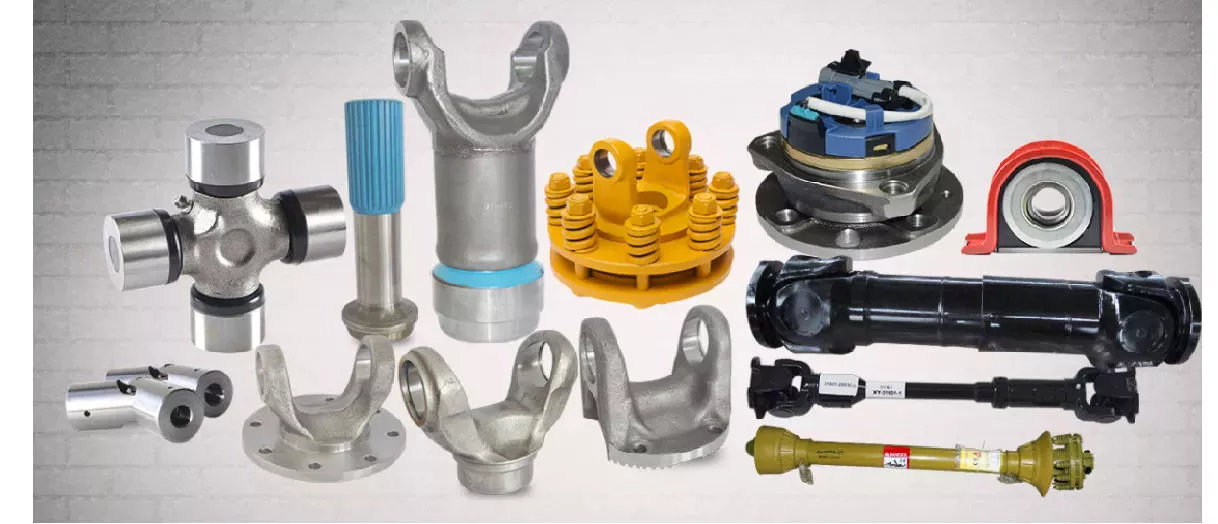
Construction
There are 3 basic types of axle shafts: fully floating, three-quarter floating, and semi-floating. Depending on how the shaft is used, the axles can be either stationary or fully floating. Fully floating axle shafts are most common, but there are exceptions. Axle shafts may also be floating or stationary, or they may be fixed. When they are stationary, they are known as non-floating axles.
Different alloys have different properties. High-carbon steels are harder than low-carbon steels, while medium-carbon steels are less ductile. Medium-carbon steel is often used in axle shafts. Some shafts contain additional metals, including silicon, nickel, and copper, for case hardening. High-carbon steels are preferred over low-carbon steels. Axle shafts with high carbon content often have better heat-treatability than OE ones.
A semi-floating axle shaft has a single bearing between the hub and casing, relieving the main shear stress on the shaft but must still withstand other stresses. A half shaft needs to withstand bending loads from side thrust during cornering while transmitting driving torque. A three-quarter floating axle shaft is typically fitted to commercial vehicles that are more capable of handling higher axle loads and torque. However, it is possible to replace or upgrade the axle shaft with a replacement axle shaft, but this will require jacking the vehicle and removing the studs.
A half-floating axle is an alternative to a fixed-length rear axle. This axle design is ideal for mid-size trucks. It supports the weight of the mid-size truck and may support mid-size trucks with high towing capacities. The axle housing supports the inner end of the axle and also takes up the end thrust from the vehicle’s tires. A three-quarter floating axle, on the other hand, is a complex type that is not as simple as a semi-floating axle.
Axle shafts are heavy-duty load-bearing components that transmit rotational force from the rear differential gearbox to the rear wheels. The half shaft and the axle casing support the road wheel. Below is a diagram of different forces that can occur in the axle assembly depending on operating conditions. The total weight of the vehicle’s rear can exert a bending action on the half shaft, and the overhanging section of the shaft can be subject to a shearing force.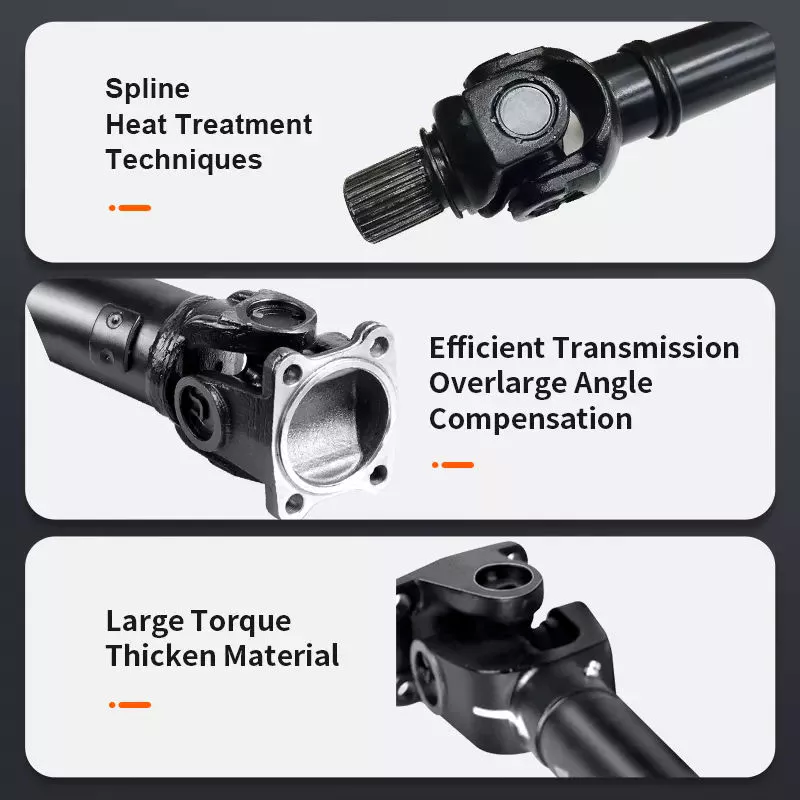
Symptoms of wear out
The constant velocity axle, also called the half shaft, transmits power from the transmission to the wheels, allowing the vehicle to move forward. When it fails, it can result in many problems. Here are 4 common symptoms of a bad CV axle:
Bad vibrations: If you notice any sort of abnormal vibration while driving, this may be a sign of axle damage. Vibrations may accompany a strange noise coming from under the vehicle. You may also notice tire wobble. It is important to repair this problem as it could be harmful to your car’s handling and comfort. A damaged axle is generally accompanied by other problems, including a weak braking response.
A creaking or popping sound: If you hear this noise when turning your vehicle, you probably have a worn out CV axle. When the CV joints lose their balance, the driveshaft is no longer supported by the U-joints. This can cause a lot of vibrations, which can reduce your vehicle’s comfort and safety. Fortunately, there are easy ways to check for worn CV axles.
CV joints: A CV joint is located at each end of the axle shaft. In front-wheel drive vehicles, there are 2 CV joints, 1 on each axle. The outer CV joint connects the axle shaft to the wheel and experiences more movement. In fact, the CV joints are only as good as the boot. The most common symptoms of a failed CV joint include clicking and popping noises while turning or when accelerating.
CV joint: Oftentimes, CV joints wear out half of the axle shaft. While repairing a CV joint is a viable repair, it is more expensive than replacing the axle. In most cases, you should replace the CV joint. Replacement will save you time and money. ACV joints are a vital part of your vehicle’s drivetrain. Even if they are worn, they should be checked if they are loose.
Unresponsive acceleration: The vehicle may be jerky, shuddering, or slipping. This could be caused by a bent axle. The problem may be a loose U-joint or center bearing, and you should have your vehicle inspected immediately by a qualified mechanic. If you notice jerkiness, have a mechanic check the CV joints and other components of the vehicle. If these components are not working properly, the vehicle may be dangerous.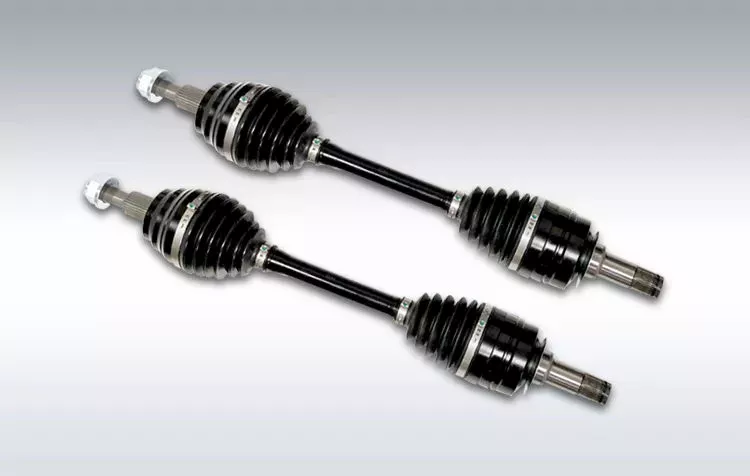
Maintenance
There are several points of concern regarding the maintenance of axle shafts. It is imperative to check the axle for any damage and to lubricate it. If it is clean, it may be lubricated and is working properly. If not, it will require replacement. The CV boots need to be replaced. A broken axle shaft can result in catastrophic damage to the transmission or even cause an accident. Fortunately, there are several simple ways to maintain the axle shaft.
In addition to oil changes, it is important to check the differential lube level. Some differentials need cleaning or repacking every so often. CZPT Moreno Valley, CA technicians know how to inspect and maintain axles, and they can help you determine if a problem is affecting your vehicle’s performance. Some common signs of axle problems include excessive vibrations, clunking, and a high-pitched howling noise.
If you’ve noticed any of these warning signs, contact your vehicle’s manufacturer. Most manufacturers offer service for their axles. If it’s too rusted or damaged, they’ll replace it for you for free. If you’re in doubt, you can take it to a service center for a repair. They’ll be happy to assist you in any aspect of your vehicle’s maintenance. It’s never too early to begin.
CZPT Moreno Valley, CA technicians are well-versed in the repair of axles and differentials. The CV joint, which connects the car’s transmission to the rear wheels, is responsible for transferring the power from the engine to the wheels. Aside from the CV joint, there are also protective boots on both ends of the axle shaft. The protective boots can tear with age or use. When they tear, they allow grease and debris to escape and get into the joint.
While the CV joint is the most obvious place to replace it, this isn’t a time to ignore this important component. Taking care of the CV joint will protect your car from costly breakdowns at the track. While servicing half shafts can help prevent costly replacement of CV joints, it’s best to do it once a season or halfway through the season. ACV joints are essential for your car’s safety and function.

