
Product Description
Product Description
Product Parameters
| Size | PR | Tube | Standard | Max load | Pressure | Section | Overall Dia |
| Type | Rim | (KG) | (KPa) | Width(mm) | (mm) | ||
| 350-6 | 4 | TT | 3.00D | 265 | 220 | 85 | 310 |
| 280/70-16 | 8 | TL | 8 | 1700 | 360 | 282 | 800 |
| 280/70-18 | 8 | TL | 9 | 1900 | 360 | 282 | 905 |
| 11.5/80-15.3 | 10 | TL | 9 | 55PSR | 380 | 260 | 820 |
| 3.88-7 | 4 | TT | 3.00D | 265 | 300 | 80 | 370 |
| 4.00-7 | 4 | TT | 3.00D | 250 | 250 | 110 | 390 |
| 4.00-8 | 4 | TT | 3.00D | 280 | 250 | 110 | 420 |
| 4.00-10 | 6 | TT | 3.00D | 210 | 250 | 110 | 475 |
| 4.00-12 | 6 | TT | 3.00D | 395 | 400 | 110 | 570 |
| 4.00-14 | 6 | TT | 3.00D | 270 | 360 | 110 | 640 |
| 4.00-16 | 6 | TT | 3.00D | 300 | 460 | 110 | 640 |
| 4.50-10 | 6 | TT | 3.00D | 440 | 250 | 120 | 510 |
| 4.50-19 | 6 | TT | 3.00D | 445 | 340 | 115 | 710 |
| 5.00-10 | 6 | TT | 3.00D | 330 | 250 | 140 | 507 |
| 5.00-12 | 6 | TT | 4.00E | 370 | 300 | 145 | 600 |
| 5.00-14 | 6 | TT | 4.00E | 440 | 250 | 145 | 670 |
| 5.00-15 | 6 | TT | 4.00E | 485 | 250 | 150 | 680 |
| 5.50-13 | 6 | TT | 4.00E | 520 | 300 | 160 | 620 |
Company Profile
HangZhou Lulstone Tires Co., Ltd.,is a private enterprise, mainly produces tire factory is located in the ZheJiang province HangZhou city development zone industrial park, north near jiqing expressway, jiaoji railway, south east does beautiful summer resort of HangZhou, the west according to the international kite HangZhou city, 50 km away from HangZhou international airport, has a good geographical advantage and convenient traffic conditions.
The company was founded in 2003, covers an area of 40,000 square meters, construction area of 19,000 square meters, with advanced rubber tire production equipment and strong technical force.The production of Lu Li Tong tires mainly include truck tires, light truck tires, agricultural tires, industrial vehicle tires and other 4 categories, more than 1 hundred specifications, can support a variety of vehicles.In addition to domestic sales, the company’s products are also exported to Central and South America, Southeast Asia, Africa, the Middle East, Eastern Europe and the former Soviet Union and other countries and regions, and has always enjoyed a good reputation among customers.
Hot sale
Our workshop
Certifications
Packaging & Shipping
Our customer
FAQ
Q:Why choose our tire?
A:1)our tire is best in quality-tire tread are with good design,ribs are strong,rubbers are best selected from Malysia,we have soft and hard compond for your choice,all tires are with true quality warranty.
2)our car tire are strictly controled by each process,we only sell class A quality tire.
3)we put effors on long term cooperation,first order,we will need need you cooperation to do in nomal payment terms,we have very flexible payment terms up to 90 days after 2 cooperations and always.we trust our clients and we treat you as partners,we will grow together with you in your market.
Q: How about your delivery time ?
A: Delivery time is about 2 weeks after you confirm order.
Q. What is your terms of payment?
A: 1. T/T 30% as deposit, and 70% before delivery. We’ll show you the photos of the products and packages before you pay the balance.
2. For the small amount payment, we are also can accept the Paypal and west union.
Q. How about your delivery time?
A: Generally, it will take 15 to 20 days after receiving your advance payment. The specific delivery time depends on the items and the quantity of your order.
Q. Do you test all your goods before delivery?
A: Yes, we have 100% test before delivery.
Our aim is to build up long term cooperation for mutual benefits by providing high quality tires at reasonable prices. Hope we will have the good chance to work together.
The 5 components of an axle, their function and installation
If you’re considering replacing an axle in your vehicle, you should first understand what it is. It is the component that transmits electricity from 1 part to another. Unlike a fixed steering wheel, the axles are movable. The following article will discuss the 5 components of the half shaft, their function and installation. Hopefully you were able to identify the correct axle for your vehicle. Here are some common problems you may encounter along the way.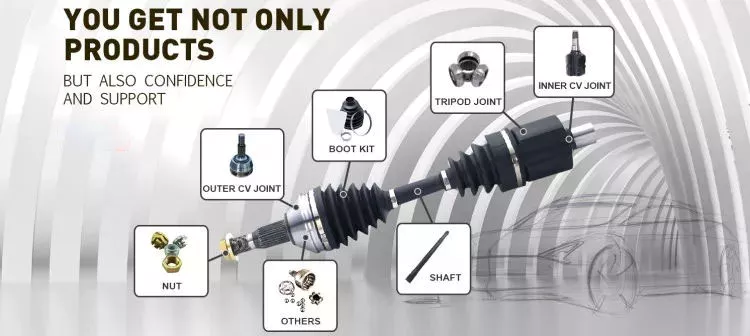
five components
The 5 components of the shaft are flange, bearing surface, spline teeth, spline pitch and pressure angle. The higher the number of splines, the stronger the shaft. The maximum stress that the shaft can withstand increases with the number of spline teeth and spline pitch. The diameter of the shaft times the cube of the pressure angle and spline pitch determines the maximum stress the shaft can withstand. For extreme load applications, use axles made from SAE 4340 and SAE 1550 materials. In addition to these 2 criteria, spline rolling produces a finer grain structure in the material. Cutting the splines reduces the strength of the shaft by 30% and increases stress.
The asymmetric length of the shaft implies different torsional stiffness. A longer shaft, usually the driver’s side, can handle more twist angles before breaking. When the long axis is intact, the short axis usually fails, but this does not always happen. Some vehicles have short axles that permanently break, causing the same failure rate for both. It would be ideal if both shafts were the same length, they would share the same load.
In addition to the spline pitch, the diameter of the shaft spline is another important factor. The small diameter of a spline is the radius at which it resists twisting. Therefore, the splines must be able to absorb shock loads and shocks while returning to their original shape. To achieve these goals, the spline pitch should be 30 teeth or less, which is standard on Chrysler 8.75-inch and GM 12-bolt axles. However, a Ford 8.8-inch axle may have 28 or 31 tooth splines.
In addition to the CV joints, the axles also include CV joints, which are located on each end of the axle. ACV joints, also known as CV joints, use a special type of bearing called a pinion. This is a nut that meshes with the side gear to ensure proper shaft alignment. If you notice a discrepancy, take your car to a shop and have it repaired immediately.
Function
Axles play several important roles in a vehicle. It transfers power from the transmission to the rear differential gearbox and the wheels. The shaft is usually made of steel with cardan joints at both ends. Shaft Shafts can be stationary or rotating. They are all creatures that can transmit electricity and loads. Here are some of their functions. Read on to learn more about axles. Some of their most important features are listed below.
The rear axle supports the weight of the vehicle and is connected to the front axle through the axle. The rear axle is suspended from the body, frame and axle housing, usually spring loaded, to cushion the vehicle. The driveshaft, also called the propshaft, is located between the rear wheels and the differential. It transfers power from the differential to the drive wheels.
The shaft is made of mild steel or alloy steel. The latter is stronger, more corrosion-resistant and suitable for special environments. Forged for large diameter shafts. The cross section of the shaft is circular. While they don’t transmit torque, they do transmit bending moment. This allows the drive train to rotate. If you’re looking for new axles, it’s worth learning more about how they work.
The shaft consists of 3 distinct parts: the main shaft and the hub. The front axle assembly has a main shaft, while the rear axle is fully floating. Axles are usually made of chrome molybdenum steel. The alloy’s chromium content helps the axle maintain its tensile strength even under extreme conditions. These parts are welded into the axle housing.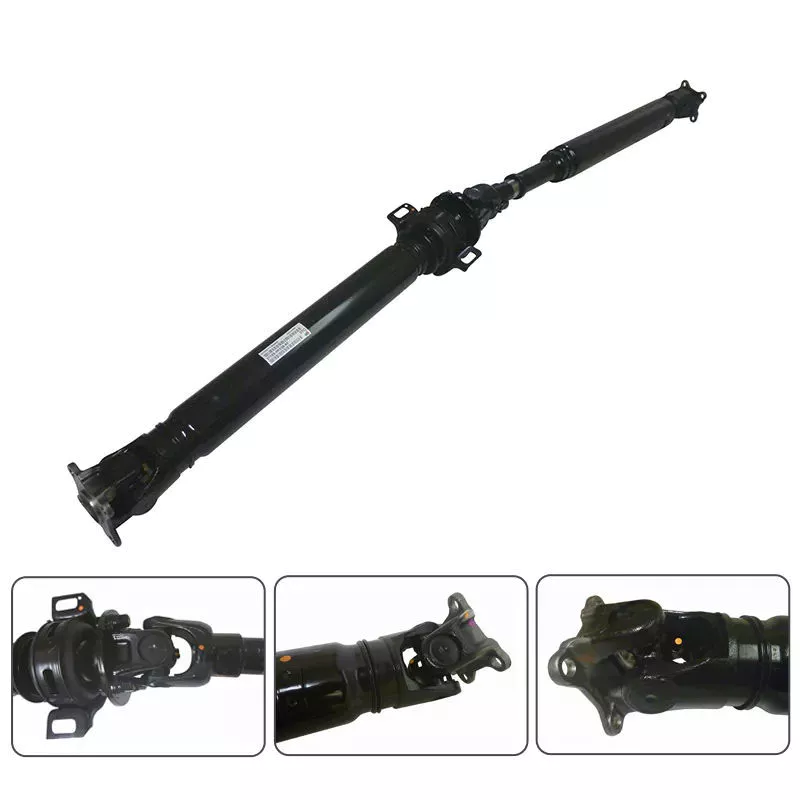
Material
The material used to make the axle depends on the purpose of the vehicle. For example, overload shafts are usually made of SAE 4340 or 1550 steel. These steels are high strength low alloy alloys that are resistant to bending and buckling. Chromium alloys, for example, are made from steel and have chromium and molybdenum added to increase their toughness and durability.
The major diameter of the shaft is measured at the tip of the spline teeth, while the minor diameter is measured at the bottom of the groove between the teeth. These 2 diameters must match, otherwise the half shaft will not work properly. It is important to understand that the brittleness of the material should not exceed what is required to withstand normal torque and twisting, otherwise it will become unstable. The material used to make the axles should be strong enough to carry the weight of a heavy truck, but must also be able to withstand torque while still being malleable.
Typically, the shaft is case hardened using an induction process. Heat is applied to the surface of the steel to form martensite and austenite. The shell-core interface transitions from compression to tension, and the peak stress level depends on the process variables used, including heating time, residence time, and hardenability of the steel. Some common materials used for axles are listed below. If you’re not sure which material is best for your axle, consider the following guide.
The axle is the main component of the axle and transmits the transmission motion to the wheels. In addition, they regulate the drive between the rear hub and the differential sun gear. The axle is supported by axle bearings and guided to the path the wheels need to follow. Therefore, they require proper materials, processing techniques and thorough inspection methods to ensure lasting performance. You can start by selecting the material for the shaft.
Choosing the right alloy for the axle is critical. You will want to find an alloy with a low carbon content so it can harden to the desired level. This is an important consideration because the hardenability of the alloy is important to the durability and fatigue life of the axle. By choosing the right alloy, you will be able to minimize these problems and improve the performance of your axle. If you have no other choice, you can always choose an alloy with a higher carbon content, but it will cost you more money.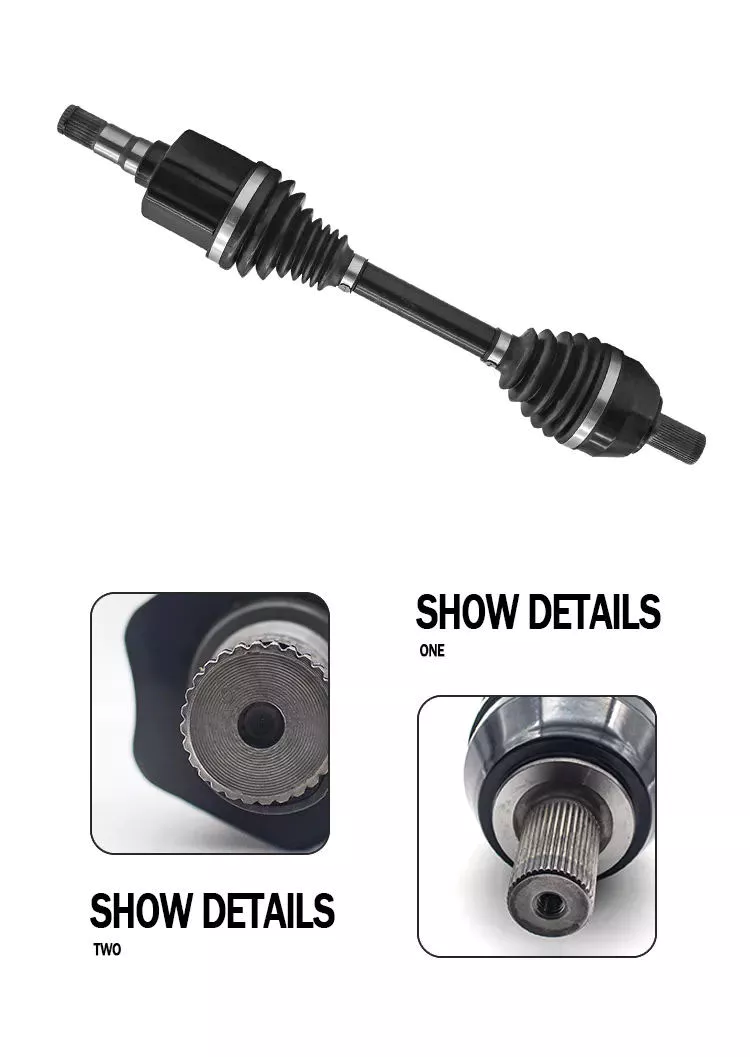
Install
The process of installing a new shaft is simple. Just loosen the axle nut and remove the set bolt. You may need to tap a few times to get a good seal. After installation, check the shaft at the points marked “A” and “D” to make sure it is in the correct position. Then, press the “F” points on the shaft flange until the points are within 0.002″ of the runout.
Before attempting to install the shaft, check the bearings to make sure they are aligned. Some bearings may have backlash. To determine the amount of differential clearance, use a screwdriver or clamp lever to check. Unless it’s caused by a loose differential case hub, there shouldn’t be any play in the axle bearings. You may need to replace the differential case if the axles are not mounted tightly. Thread adjusters are an option for adjusting drive gear runout. Make sure the dial indicator is mounted on the lead stud and loaded so that the plunger is at right angles to the drive gear.
To install the axle, lift the vehicle with a jack or crane. The safety bracket should be installed under the frame rails. If the vehicle is on a jack, the rear axle should be in the rebound position to ensure working clearance. Label the drive shaft assemblies and reinstall them in their original positions. Once everything is back in place, use a 2-jaw puller to pry the yoke and flange off the shaft.
If you’ve never installed a half shaft before, be sure to read these simple steps to get it right. First, check the bearing surfaces to make sure they are clean and undamaged. Replace them if they look battered or dented. Next, remove the seal attached to the bushing hole. Make sure the shaft is installed correctly and the bearing surfaces are level. After completing the installation process, you may need to replace the bearing seals.

