
Product Description
Our main products, steel gearboxes ,gear systems for motors through powder metallurgy processing.
We specialize in designing and manufacturing highly engineered, custom gear parts , gearbox , components and assemblies. Our professional staff are geared towards providing customers with high quality products and excellent service .
A gearbox is a power transmission device to produce high torque by reducing the drive speed or increase the drive speed the other way. Planetary gearbox consisting 3 components: sun gear, planet gear and ring gear . A Sun gear is a gearwheel in a planetary gear system, that rotates around its own axis and has other gears (planet gears) that rotate around it. Much like the Sun and planets in our solar system. The amount of planetary gears in a gearbox varies based on the gear ratio. Most planetary gearboxes have from 2 to 5 planet gears. When looking at planetary gears, the strength of the gearbox is usually determined by the size of the sun gear. Larger sun gears will allow for higher torque values. The planet carrier,Its objective is to hold up to gears of the same size, which mesh with the sun gear. In a simple planetary gearbox setup, input power turns the sun gear at high speed. The planets, spaced around the central axis of rotation, mesh with the sun as well as the fixed ring gear, so they are forced to orbit as they roll. All the planets are mounted to a single rotating member, called carrier. As the planet carrier turns, it delivers low-speed, high-torque output. The Sun Gear Gets The Input While The 3 Planet Gears Provide The Ouput Via A Planet Carrier .
Our gearbox,Light weight,small size, high carrying capacity, long service life .Smooth operation, low noise, large output torque, large speed ratio, high efficiency, power diversion, and multi-tooth meshing by powder metallurgy process .
Gearbox ratio 3 to 1000 .
Customized metal parts specification
| Product type | Custom gear parts ,OEM planetary gear system , speed reducer , motor gears , custom motor gearbox |
| Material | metal |
| Process | Powder metallurgy , metal injection molding , cnc machining |
| Treatment | plating ,sand blasting , PVD , coating |
| Tolerance | ±0.3% |
| Drawing format | DWG ,IGS , STP |
| Delivery time | 10 days for mass production |
Powder metallurgy (PM) is a metal parts / components fabrication way and made from metal powders material . The process of powder metallurgy (PM) is blending fine powder materials , press them into a desired shape or form compacting , and heating the compressed material in a controlled atmosphere to CHINAMFG the material sintering .PM process can avoid , or greatly reduce the need to use metal removal processes,thereby drastically reducing yield losses in manufacture and oftern resulting in lower costs .
The powder metallurgy (PM) consist 3 steps : powder blending,compaction and sintering .Common products include gears , structural metal parts , bushings used for automobiles , appliances and powder equipments .
Advantages of powder metallurgy
Products made by powder metallurgy (PM) generally do not need further finishing , because produces good surface finish.
Maintains close dimensional tolerances
Provides materials which may be heat treated for increased strength or enhanced wear resistance .
There is less wastage of raw material , can be very economical for mass production .
Complex shapes parts can be made . Provides controlled porosity for self-lubrication or filtration.
Suits to high volume parts productions requirements .
Custom metal parts
Workshop
/* January 22, 2571 19:08:37 */!function(){function s(e,r){var a,o={};try{e&&e.split(“,”).forEach(function(e,t){e&&(a=e.match(/(.*?):(.*)$/))&&1
| Application: | Motor, Electric Cars, Motorcycle, Machinery, Marine, Toy, Agricultural Machinery, Car |
|---|---|
| Function: | Distribution Power, Clutch, Change Drive Torque, Change Drive Direction, Speed Changing, Speed Reduction, Speed Increase |
| Layout: | Coaxial |
| Hardness: | Hardened Tooth Surface |
| Installation: | Torque Arm Type |
| Step: | Three-Step |
| Samples: |
US$ 6/Piece
1 Piece(Min.Order) | |
|---|
| Customization: |
Available
| Customized Request |
|---|
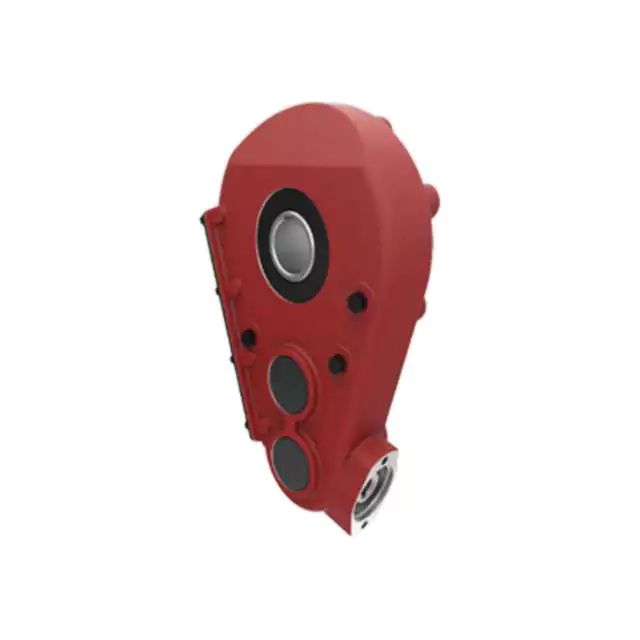
Technological Advancements in Agricultural Gearbox Design
Advancements in agricultural gearbox design have significantly improved the efficiency, durability, and performance of farming equipment. Here are some notable technological advancements:
- Materials and Manufacturing: The use of advanced materials, such as high-strength alloys and composite materials, has enhanced the durability and longevity of gearbox components. Precision manufacturing techniques, including computer-aided design (CAD) and computer numerical control (CNC) machining, ensure tight tolerances and reliable performance.
- Gear Tooth Design: Modern gear tooth profiles, such as optimized helical and spiral bevel gears, reduce noise, vibration, and wear. Advanced tooth design also improves power transmission efficiency and load distribution.
- Sealing and Lubrication: Improved sealing technologies, such as double-lip seals and labyrinth seals, help prevent contaminants from entering gearboxes while retaining lubricants. Advanced lubrication systems, including automatic lubrication and improved oil formulations, extend maintenance intervals and enhance efficiency.
- Electronic Controls: Agricultural gearboxes increasingly integrate with electronic control systems. Sensors and actuators provide real-time data on gearbox performance, allowing for condition monitoring, predictive maintenance, and adjustments to optimize machinery operation.
- Smart Gearboxes: Some agricultural gearboxes are equipped with smart features, such as load sensors, temperature monitors, and feedback systems. These features enhance precision, safety, and overall equipment performance.
- Hybrid Power Transmission: Integration of hybrid power transmission systems, combining internal combustion engines with electric motors, allows for more efficient power delivery and reduced fuel consumption. Gearboxes play a crucial role in managing power distribution in these systems.
- Reduced Environmental Impact: Advancements in gear design contribute to reducing environmental impact. Quieter and more efficient gearboxes minimize noise pollution and energy consumption while meeting emissions regulations.
- Customization and Modularity: Some modern agricultural gearboxes offer modular designs that allow farmers to customize gear ratios, output speeds, and other specifications to match specific tasks and conditions.
- Simulation and Testing: Computer simulations and advanced testing methods, such as finite element analysis (FEA) and computational fluid dynamics (CFD), help optimize gearbox design, reduce prototyping costs, and ensure reliability before production.
These advancements collectively contribute to the evolution of agricultural gearboxes, making farming machinery more efficient, environmentally friendly, and adaptable to the changing needs of modern agriculture.
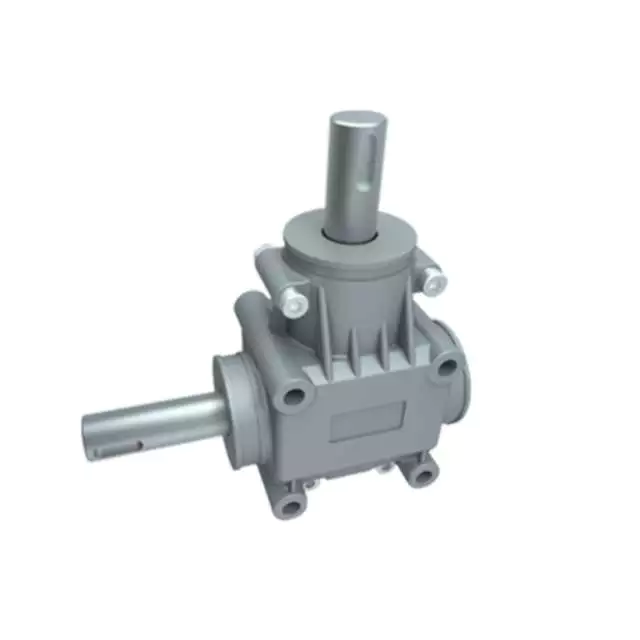
Types of Farming Equipment Incorporating Agricultural Gearboxes
Agricultural gearboxes play a vital role in various farming equipment, enhancing their efficiency and enabling them to perform essential tasks. Here are some types of farming equipment that commonly incorporate agricultural gearboxes:
- Tractors: Agricultural gearboxes are integral components of tractors, contributing to power transmission from the engine to various attachments such as plows, harrows, and mowers.
- Harvesters: Harvesters, used to gather crops like grains, fruits, and vegetables, utilize gearboxes to drive conveyor systems and separators, ensuring smooth and efficient harvesting operations.
- Planters and Seeders: Planters and seeders rely on gearboxes to precisely distribute seeds and fertilizers while maintaining the desired planting depth.
- Sprayers: Agricultural gearboxes are used in sprayers to drive pumps that distribute pesticides, herbicides, and fertilizers over fields.
- Hay Balers: Gearboxes are essential in hay balers for compacting and forming bales of hay, enabling easy storage and transportation.
- Manure Spreaders: Manure spreaders incorporate gearboxes to distribute and spread fertilizers and compost evenly across fields.
- Grain Augers: Grain augers, used for loading and unloading grains, feature gearboxes to drive the rotating screw mechanism that lifts and transfers grains.
- Cultivators: Cultivators use gearboxes to drive rotating tines or blades that loosen and prepare the soil for planting.
- Rotary Cutters: Rotary cutters, often attached to tractors, utilize gearboxes to power the spinning blades used for cutting tall grass, weeds, and brush.
- Threshers: Threshers, employed for separating grains from their husks or stalks, incorporate gearboxes to drive the threshing mechanisms.
These examples demonstrate the diverse applications of agricultural gearboxes across a wide range of farming equipment. By providing reliable power transmission and control, agricultural gearboxes contribute significantly to the productivity and efficiency of modern agricultural practices.
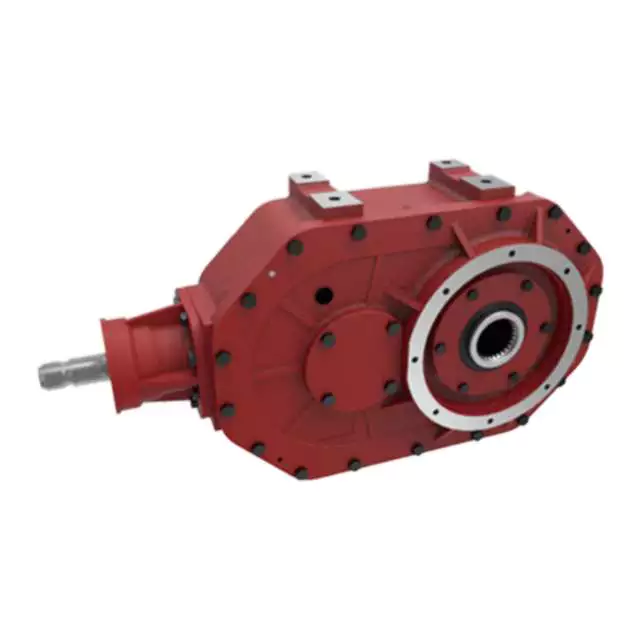
Power Transmission in Farming Equipment with Agricultural Gearboxes
Agricultural gearboxes play a vital role in facilitating power transmission within various types of farming equipment. These gearboxes are integral components that enable the transfer of rotational power from a tractor’s engine to different agricultural implements and machinery. Here’s how agricultural gearboxes contribute to power transmission:
- Speed Reduction: In many farming operations, the engine of a tractor or other power source operates at a higher speed than is suitable for the optimal functioning of agricultural implements. Agricultural gearboxes provide speed reduction by using a combination of gears with different numbers of teeth. This reduction in speed allows the machinery to operate at the required speed for efficient tasks like tilling, planting, or harvesting.
- Power Multiplication: Some agricultural tasks require a significant amount of torque to operate effectively. Gearboxes can multiply the input torque from the engine to generate higher torque at the output shaft. This is crucial for tasks such as plowing, where substantial force is needed to break up the soil.
- Directional Change: Agricultural gearboxes also allow for changes in the direction of power transmission. For instance, a tractor’s power take-off (PTO) shaft may need to transmit power at a right angle to the tractor’s engine. Gearboxes with bevel gears or other arrangements enable this change in direction, ensuring that power is properly directed to the implement.
- Power Distribution: In certain cases, power needs to be distributed to multiple components or implements. Agricultural gearboxes with multiple output shafts can distribute power to different tasks simultaneously, optimizing efficiency and productivity.
- Attachment Operation: Many agricultural implements, such as plows, seed drills, and rotary mowers, require consistent and controlled power to function effectively. Gearboxes provide the necessary power and control to these attachments, ensuring uniform operation and accurate results.
By facilitating speed reduction, power multiplication, directional changes, power distribution, and attachment operation, agricultural gearboxes contribute significantly to the overall efficiency and productivity of farming equipment. They allow farmers to adapt their machinery to various tasks, optimize power usage, and achieve better results in different agricultural operations.


editor by CX 2024-04-22