
Product Description
Doosan Crawler tractor undercarriage spare parts carrier roller top roller and upper roller
It has different names top roller and upper roller, it can be used for crawler equipment excavator and dozer, such as Caterpillar,Komatsu, Hitachi,Doosan, Volvo,Kobelco,Daewoo,JCB, John Deere,Kubota,Hyundai,Sumitomo,Kato,Fiat-Hitachi,Samsung,Liebherr, and so on.
Carrier roller is very important for construction machinery, they are responsible to support the weight of machinery, so high quality carrier roller is very important in construction working.
Choose genuine quality carrier roller for construction machinery parts, Fortunepart will be your best undercarriage parts supplier in China.
| HangZhou Fortune Industrial Co., Limited | |
| Product Name | Doosan excavator and dozer undercarriage spare parts carrier roller/upper roller/top roller |
| Production Standard | ITR production standard & OEM installment size |
| Material | 50Mn/40MnB/42MnB |
| Finish | Smooth |
| Painting Color | Black or yellow |
| Process | Forging & casting |
| Surface Hardness | HRC52-58, Depth:8mm-12mm |
| Quality Guarantee | One Year |
| Certification | ISO9001-9002 |
| Delivery Time | Within 10–20 days after advance contract establishment |
| Package | Fumigate seaworthy packing and Export Standard Package |
| Payment Term | TT, L/C, Paypal, Western union,D/P |
| Business Scope | excavator and dozer undercarriage parts, G.E.T, Hydraulic spare parts,underground engage tools, etc |
| Our Carrier Roller advantage(Why Choose ours) |
| 1.Good lubricated oil recycle system |
| 2. High hardness :HRC52-58,deepth:8mm-12mm |
| 3. Deep hardened wear surface |
| 4. Good bronze bushings |
| 5.Strict Quality Control |
| 6.OEM mounting dimension |
| 7.Certificated by ISO9001:2008 |
| 8.Produce as per client’s samples,designs and drawings |
Carrier Roller Functions:
1.Support the track as its most between the sprocket and idler.
2.Xihu (West Lake) Dis. the track between the sprocket and idler
3.Strength to resist failure before tread wear life is utilized.
4.Treads wear life matched to track links.
5.Treads and flanges rebuild CZPT on forged shells.
6.Thru-hardened flanges to resist bending and improve rebuild ability.
Excavator and bulldozer undercarriage track model list
| MAKES | APPLICABLE MACHINES |
| CATERPILLAR | E70B E110B E120B E307 E308 E311B E180 E240 E200B E300 E320 E322 E330 E340 E345 E350 E450 CAT215 CAT225 CAT235 D3B D3C D4C D4D D4E D5 D5H D6C D6D D6H D6R D6T D7G D7H D7R D8N D8R D8T D8L D9N D9R D10N D10T D11N |
| PC20 PC25 PC30 PC40 PC60 PC100 PC120 PC200 PC220 PC240 PC300 PC350 PC360 PC400 PC450 PC650 PC750 PC1000 D20 D21 D30 D31 D40 D41 D50 D53 D55 D60 D65 D85 D155 D275 D355 D375 |
|
| HITACHI | EX30 EX40 EX45 EX50 EX75 EX100 EX120 EX200 EX220 EX285 EX300 EX330 EX400 EX450 EX550 EX650 EX700 EX750 EX1100 EX1200 ZX50 ZX75 ZX200 ZX230 ZX240 ZX270 ZX300 ZX330 ZX450 |
| JCB | JS120 JS130 JS200 JS205 JS220 JS330 JS360LC JS460 |
| KOBELCO | SK60 SK100 SK120 SK210 SK220 SK230 SK250 SK270 SK300 SK310 SK320 SK330 SK400 K904 K907 SK07 SK04N2 SK07N2 SK09N2 |
| VOLVO | EC140 EC210 EC240 EC290 EC360 EC380DL EC460 |
| HYUNDAI | R60 R130 R200 R210 R220 R290 R320 R330 R450 |
| DAEWOO | DH55 DH130 DH180 DH200 DH220 DH280 DH300 |
| DOOSAN | DX140 DX180 DX220 DX225 DX235 DX255 DX300 DX340 DX380 DX420 DX480 DX520 |
| KATO | HD250 HD400 HD450 HD700 HD770 HD820 HD1250 |
| SUMITOMO | SH100 SH120 SH200 SH220 SH250 SH260 SH280 SH300 SH340 SH430 SH580 LS1200 LS1600 LS2035 LS2050 LS2650 LS2800 LS3400 LS4300 LS5800 |
| SAMSUNG | SE130 SE210 SE280 SE350 |
| FIAT-HITACHI | FH120 FH200 FH220 FH300 FH330 |
| LIEBHERR | PR724 PR734 R901 R902 R934 R941 R942 R944 R945 R952 R954 R971 R974 R981 R982 R984 |
| CASE | CX120 CX130 CX210 CX240 CX330 CX360 |
| NEW HOLLAND | E135 E145B E165 E175 E215LC E235 E245B E265 E305LC E385LC E485 |
| BOBCAT | BOBCAT 325 BOBCAT 418 E26 E32 E35 E42 |
FAQ
1.What HangZhou Fortune Industrial Co.,Limited supply?
We mainly supply crawler excavator and dozer undercarriage parts, such as Track roller, Carrier roller, Sprocket, Idler,Recoil spring assy, Track chain, Track shoe, Track bolt&nut,Track chain guard, Excavator bucket,Bucket teeth&adaptor, Bucket Link,Cutting Edge and End Bits,Grader blades,boom cylinder,arm cylinder,bucket cylinder,Bucket pin&bush,Slewing Bearing, Long reach boom and arm, etc.
2.How to confirm the spare parts will fit our crawler excavator and dozer?
Please send us your excavator and dozer model name, part number, Berco number, or technical drawings and dimensions
3.How about the construction machinery excavator and dozer undercarriage parts Quality Control?
We have an excellent QC system, the QC team will inspect every production process,quality and specification, to be sure best quality and correct size, untill packages finished and loaded into container.
4.What is the payment term?
TT, L/C, Paypal, Western Union, other payment term also can be negotiated.
Choose genuine quality excavator carrier roller for construction machinery parts,
Fortunepart will be your best undercarriage parts supplier in China.
Types of Screw Shafts
Screw shafts come in various types and sizes. These types include fully threaded, Lead, and Acme screws. Let’s explore these types in more detail. What type of screw shaft do you need? Which 1 is the best choice for your project? Here are some tips to choose the right screw:
Machined screw shaft
The screw shaft is a basic piece of machinery, but it can be further customized depending on the needs of the customer. Its features include high-precision threads and ridges. Machined screw shafts are generally manufactured using high-precision CNC machines or lathes. The types of screw shafts available vary in shape, size, and material. Different materials are suitable for different applications. This article will provide you with some examples of different types of screw shafts.
Ball screws are used for a variety of applications, including mounting machines, liquid crystal devices, measuring devices, and food and medical equipment. Various shapes are available, including miniature ball screws and nut brackets. They are also available without keyway. These components form a high-accuracy feed mechanism. Machined screw shafts are also available with various types of threaded ends for ease of assembly. The screw shaft is an integral part of linear motion systems.
When you need a machined screw shaft, you need to know the size of the threads. For smaller machine screws, you will need a mating part. For smaller screw sizes, the numbers will be denominated as industry Numeric Sizes. These denominations are not metric, but rather in mm, and they may not have a threads-per-inch designation. Similarly, larger machine screws will usually have threads that have a higher pitch than those with a lower pitch.
Another important feature of machine screws is that they have a thread on the entire shaft, unlike their normal counterparts. These machine screws have finer threads and are intended to be screwed into existing tapped holes using a nut. This means that these screws are generally stronger than other fasteners. They are usually used to hold together electronic components, industrial equipment, and engines. In addition to this, machine screws are usually made of a variety of materials.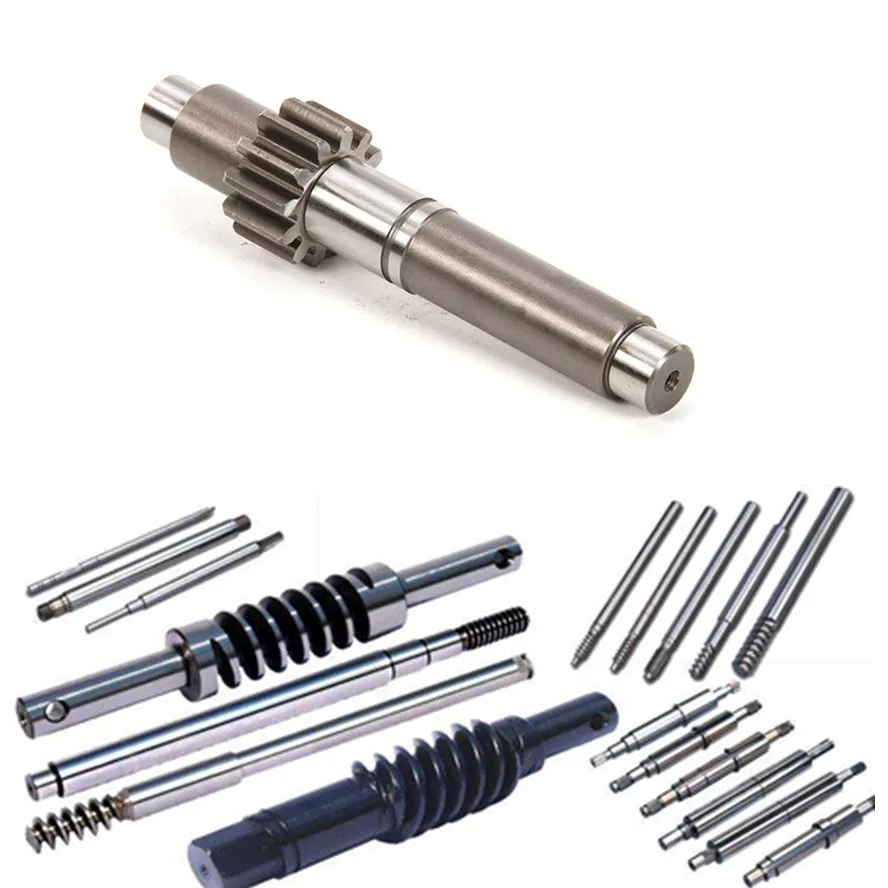
Acme screw
An Acme screw is the most common type of threaded shaft available. It is available in a variety of materials including stainless steel and carbon steel. In many applications, it is used for large plates in crushing processes. ACME screws are self-locking and are ideal for applications requiring high clamping force and low friction. They also feature a variety of standard thread forms, including knurling and rolled worms.
Acme screws are available in a wide range of sizes, from 1/8″ to 6″. The diameter is measured from the outside of the screw to the bottom of the thread. The pitch is equal to the lead in a single start screw. The lead is equal to the pitch plus the number of starts. A screw of either type has a standard pitch and a lead. Acme screws are manufactured to be accurate and durable. They are also widely available in a wide range of materials and can be customized to fit your needs.
Another type of Acme screw is the ball screw. These have no back drive and are widely used in many applications. Aside from being lightweight, they are also able to move at faster speeds. A ball screw is similar to an Acme screw, but has a different shape. A ball screw is usually longer than an Acme screw. The ball screw is used for applications that require high linear speeds. An Acme screw is a common choice for many industries.
There are many factors that affect the speed and resolution of linear motion systems. For example, the nut position and the distance the screw travels can all affect the resolution. The total length of travel, the speed, and the duty cycle are all important. The lead size will affect the maximum linear speed and force output. If the screw is long, the greater the lead size, the higher the resolution. If the lead length is short, this may not be the most efficient option.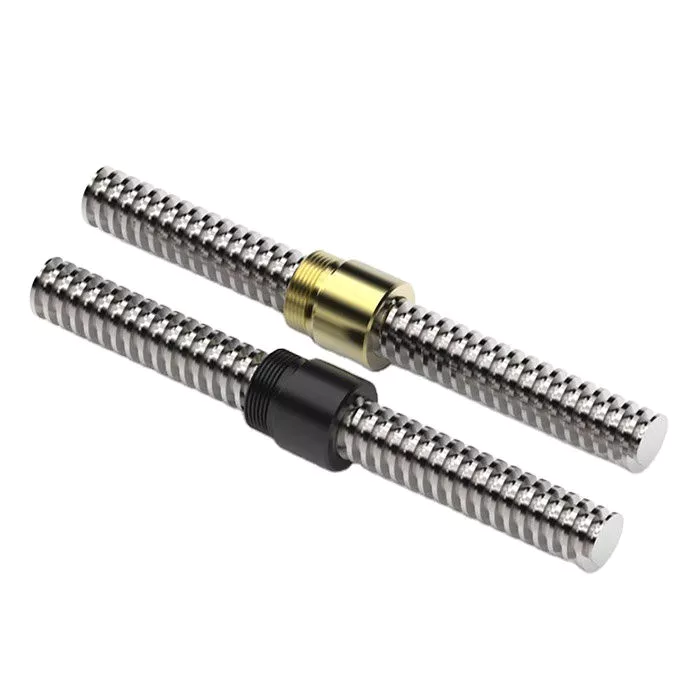
Lead screw
A lead screw is a threaded mechanical device. A lead screw consists of a cylindrical shaft, which includes a shallow thread portion and a tightly wound spring wire. This spring wire forms smooth, hard-spaced thread convolutions and provides wear-resistant engagement with the nut member. The wire’s leading and trailing ends are anchored to the shaft by means appropriate to the shaft’s composition. The screw is preferably made of stainless steel.
When selecting a lead screw, 1 should first determine its critical speed. The critical speed is the maximum rotations per minute based on the natural frequency of the screw. Excessive backlash will damage the lead screw. The maximum number of revolutions per minute depends on the screw’s minor diameter, length, assembly alignment, and end fixity. Ideally, the critical speed is 80% of its evaluated critical speed. A critical speed is not exceeded because excessive backlash would damage the lead screw and may be detrimental to the screw’s performance.
The PV curve defines the safe operating limits of a lead screw. This relationship describes the inverse relationship between contact surface pressure and sliding velocity. As the PV value increases, a lower rotation speed is required for heavier axial loads. Moreover, PV is affected by material and lubrication conditions. Besides, end fixity, which refers to the way the lead screw is supported, also affects its critical speed. Fixed-fixed and free end fixity are both possible.
Lead screws are widely used in industries and everyday appliances. In fact, they are used in robotics, lifting equipment, and industrial machinery. High-precision lead screws are widely used in the fields of engraving, fluid handling, data storage, and rapid prototyping. Moreover, they are also used in 3D printing and rapid prototyping. Lastly, lead screws are used in a wide range of applications, from measuring to assembly.
Fully threaded screw
A fully threaded screw shaft can be found in many applications. Threading is an important feature of screw systems and components. Screws with threaded shafts are often used to fix pieces of machinery together. Having fully threaded screw shafts ensures that screws can be installed without removing the nut or shaft. There are 2 major types of screw threads: coarse and fine. When it comes to coarse threads, UTS is the most common type, followed by BSP.
In the 1840s, a British engineer named Joseph Whitworth created a design that was widely used for screw threads. This design later became the British Standard Whitworth. This standard was used for screw threads in the United States during the 1840s and 1860s. But as screw threads evolved and international standards were established, this system remained largely unaltered. A new design proposed in 1864 by William Sellers improved upon Whitworth’s screw threads and simplified the pitch and surface finish.
Another reason for using fully threaded screws is their ability to reduce heat. When screw shafts are partially threaded, the bone grows up to the screw shaft and causes the cavity to be too narrow to remove it. Consequently, the screw is not capable of backing out. Therefore, fully threaded screws are the preferred choice for inter-fragmentary compression in children’s fractures. However, surgeons should know the potential complication when removing metalwork.
The full thread depth of a fully threaded screw is the distance at which a male thread can freely thread into the shaft. This dimension is typically 1 millimeter shy of the total depth of the drilled hole. This provides space for tap lead and chips. The full-thread depth also makes fully threaded screws ideal for axially-loaded connections. It is also suitable for retrofitting applications. For example, fully threaded screws are commonly used to connect 2 elements.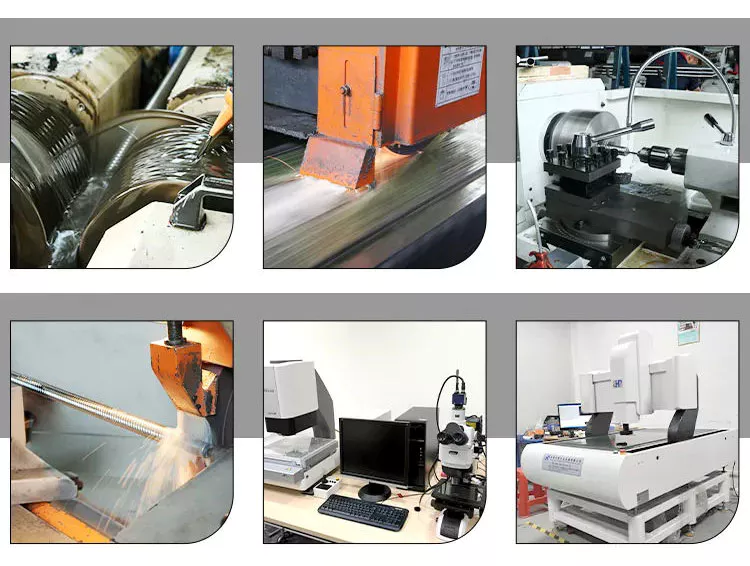
Ball screw
The basic static load rating of a ball screw is determined by the product of the maximum axial static load and the safety factor “s0”. This factor is determined by past experience in similar applications and should be selected according to the design requirements of the application. The basic static load rating is a good guideline for selecting a ball screw. There are several advantages to using a ball screw for a particular application. The following are some of the most common factors to consider when selecting a ball screw.
The critical speed limit of a ball screw is dependent on several factors. First of all, the critical speed depends on the mass, length and diameter of the shaft. Second, the deflection of the shaft and the type of end bearings determine the critical speed. Finally, the unsupported length is determined by the distance between the ball nut and end screw, which is also the distance between bearings. Generally, a ball screw with a diameter greater than 1.2 mm has a critical speed limit of 200 rpm.
The first step in manufacturing a high-quality ball screw is the choice of the right steel. While the steel used for manufacturing a ball screw has many advantages, its inherent quality is often compromised by microscopic inclusions. These microscopic inclusions may eventually lead to crack propagation, surface fatigue, and other problems. Fortunately, the technology used in steel production has advanced, making it possible to reduce the inclusion size to a minimum. However, higher-quality steels can be expensive. The best material for a ball screw is vacuum-degassed pure alloy steel.
The lead of a ball screw shaft is also an important factor to consider. The lead is the linear distance between the ball and the screw shaft. The lead can increase the amount of space between the balls and the screws. In turn, the lead increases the speed of a screw. If the lead of a ball screw is increased, it may increase its accuracy. If not, the lead of a ball screw can be improved through preloading, lubrication, and better mounting accuracy.

