China wholesaler 70HP 80HP 90HP 100HP 4WD Agricultural Machine Farming Farm Tractor with Parts with Free Design Custom
Product Description
Characteristics
(1) Direct injection diesel engine, fuel-efficient and durable good maintenance; (2) Dual stage clutch,12F+12R gearshift, flat deck available,easy to operate; (3) Adopt Quanchai engine, Chinese famous diesel engine , big brand, quality assurance; (4)Rear three-point suspension, multi way valve, equipped all kinds of the farm implement (5)Streamlined design, novel and beautiful appearance
Product Parameters
Main Technical Data of TH1 square meters, is 1 of the most professional tractor manufacturer in China. With 20 years development, Taihong is capable of producing tractor from 25hp to 240hp and has a large market share at home and abroad. Taihong has its own foundry, casting, machinery processing center. Some parts are made by itself to realize the whole quality control from spare parts. The products are certified by ISO9001, SGS, CCC.Our Certification
Agricultural Implements
We supply all kinds of tractor implements, like front end loader, backhoe, disc plough, disc harrow, rotary tiller, cultivator, sprayer, corn CZPT planter/ seeder, rice transplanter, rice harvester, rice mill, potato harvestor, mower, front end loader and pbackhoe, snowbrush, hay baler, planter etc. We provide you good prices with high quality.
Service and Warranty: Pre-sales service 1.24 hours online, Any questions about our machine will be quickly replied. 2.Optimum design and selection according to customer’s requirements and environment 3. Welcome to visit our factory and discuss cooperation Selling service 1.test and inspect every tractor carefully and seriously 2. Technical guidance on common problems, Provide guidelines and videos on how to use them 3.send you the tractor photos for you before packing for your comfimation After-sales service 1. Except for fragile parts, the whole machine is guaranteed for 1 year 2. Provide 24-hour technical support via e-mail/telephone 3. We will provide you with the parts atlas and installation video.
Packing and Delivery
FAQ
1. Q: Are you a factory or a trading company? We are a professional manufacturer of tractors. It has more than 20 years of experience. 2. Q: Can we use our logo or design? Sure,OEM is welcome any time.we can also provide whole tractor model design. 3. Q:About price The price is negotiable. It can be changed according to tractor optional or package. 4. Q:what’s your payment terms? Normally we use T/T, we also accept other payment terms,such as Wstern Uion,Pypal and L/C 5. Q: What’s your MOQ? 1 set. 6.Q:what’s the tractor optional parts? Can be equipped with air Pump,Anti-flap,Awning,Other engine,Paddy tire,A/C cab,Double tire or your requipment. 7. Q: How is your after-sales service? A: What’s wrong with you, whether it’s within the warranty period or not? Just give us an e-mail or video. Our engineers and I are very willing to solve this problem for you. We have not only high quality machines, but also good after-sales service.
Contact us Welcome to our Factory Insisting on operation tenet of “good faith and quality first”, we do our best to provide best products and whole-hearted service. We actively cooperate with research institutes and transnational corporation, in order to realize constant innovation. HangZhou TaiHongTractor Co., Ltd. warmly welcomes domestic and abroad customers to visit us!!
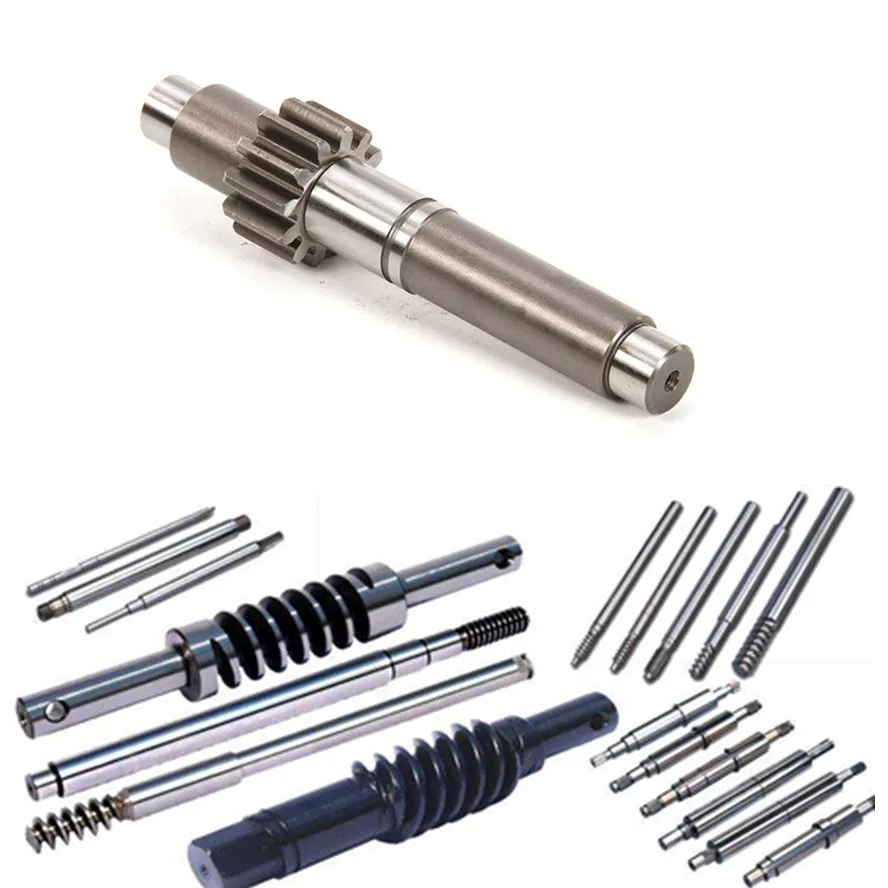
Types of Screw Shafts
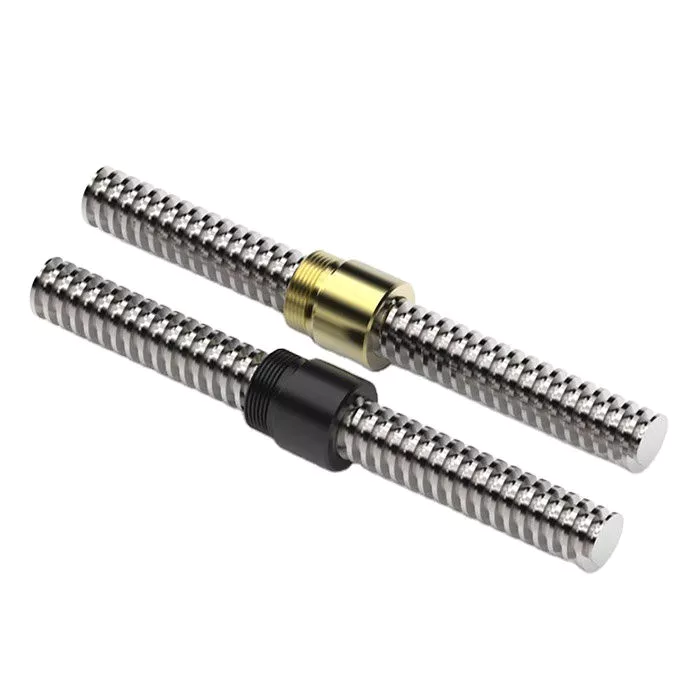
Screw shafts come in various types and sizes. These types include fully threaded, Lead, and Acme screws. Let’s explore these types in more detail. What type of screw shaft do you need? Which 1 is the best choice for your project? Here are some tips to choose the right screw:
Machined screw shaft
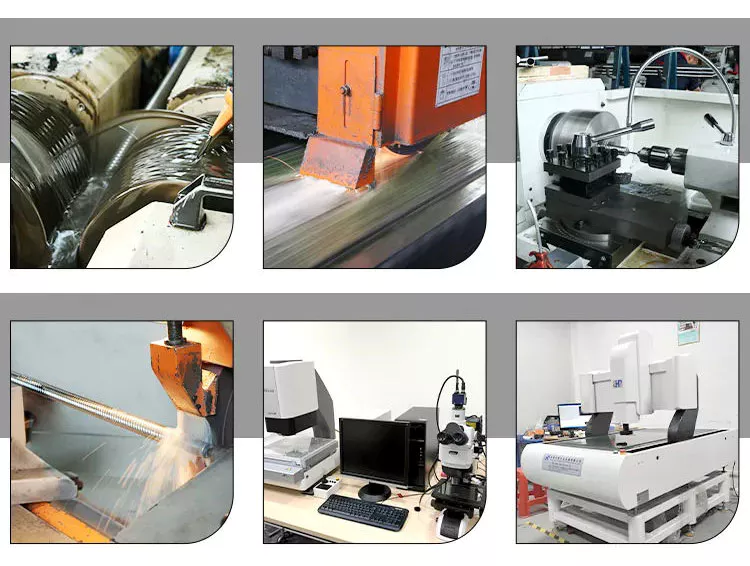
The screw shaft is a basic piece of machinery, but it can be further customized depending on the needs of the customer. Its features include high-precision threads and ridges. Machined screw shafts are generally manufactured using high-precision CNC machines or lathes. The types of screw shafts available vary in shape, size, and material. Different materials are suitable for different applications. This article will provide you with some examples of different types of screw shafts. Ball screws are used for a variety of applications, including mounting machines, liquid crystal devices, measuring devices, and food and medical equipment. Various shapes are available, including miniature ball screws and nut brackets. They are also available without keyway. These components form a high-accuracy feed mechanism. Machined screw shafts are also available with various types of threaded ends for ease of assembly. The screw shaft is an integral part of linear motion systems. When you need a machined screw shaft, you need to know the size of the threads. For smaller machine screws, you will need a mating part. For smaller screw sizes, the numbers will be denominated as industry Numeric Sizes. These denominations are not metric, but rather in mm, and they may not have a threads-per-inch designation. Similarly, larger machine screws will usually have threads that have a higher pitch than those with a lower pitch. Another important feature of machine screws is that they have a thread on the entire shaft, unlike their normal counterparts. These machine screws have finer threads and are intended to be screwed into existing tapped holes using a nut. This means that these screws are generally stronger than other fasteners. They are usually used to hold together electronic components, industrial equipment, and engines. In addition to this, machine screws are usually made of a variety of materials.
Acme screw
An Acme screw is the most common type of threaded shaft available. It is available in a variety of materials including stainless steel and carbon steel. In many applications, it is used for large plates in crushing processes. ACME screws are self-locking and are ideal for applications requiring high clamping force and low friction. They also feature a variety of standard thread forms, including knurling and rolled worms. Acme screws are available in a wide range of sizes, from 1/8″ to 6″. The diameter is measured from the outside of the screw to the bottom of the thread. The pitch is equal to the lead in a single start screw. The lead is equal to the pitch plus the number of starts. A screw of either type has a standard pitch and a lead. Acme screws are manufactured to be accurate and durable. They are also widely available in a wide range of materials and can be customized to fit your needs. Another type of Acme screw is the ball screw. These have no back drive and are widely used in many applications. Aside from being lightweight, they are also able to move at faster speeds. A ball screw is similar to an Acme screw, but has a different shape. A ball screw is usually longer than an Acme screw. The ball screw is used for applications that require high linear speeds. An Acme screw is a common choice for many industries. There are many factors that affect the speed and resolution of linear motion systems. For example, the nut position and the distance the screw travels can all affect the resolution. The total length of travel, the speed, and the duty cycle are all important. The lead size will affect the maximum linear speed and force output. If the screw is long, the greater the lead size, the higher the resolution. If the lead length is short, this may not be the most efficient option.
Lead screw
A lead screw is a threaded mechanical device. A lead screw consists of a cylindrical shaft, which includes a shallow thread portion and a tightly wound spring wire. This spring wire forms smooth, hard-spaced thread convolutions and provides wear-resistant engagement with the nut member. The wire’s leading and trailing ends are anchored to the shaft by means appropriate to the shaft’s composition. The screw is preferably made of stainless steel. When selecting a lead screw, 1 should first determine its critical speed. The critical speed is the maximum rotations per minute based on the natural frequency of the screw. Excessive backlash will damage the lead screw. The maximum number of revolutions per minute depends on the screw’s minor diameter, length, assembly alignment, and end fixity. Ideally, the critical speed is 80% of its evaluated critical speed. A critical speed is not exceeded because excessive backlash would damage the lead screw and may be detrimental to the screw’s performance. The PV curve defines the safe operating limits of a lead screw. This relationship describes the inverse relationship between contact surface pressure and sliding velocity. As the PV value increases, a lower rotation speed is required for heavier axial loads. Moreover, PV is affected by material and lubrication conditions. Besides, end fixity, which refers to the way the lead screw is supported, also affects its critical speed. Fixed-fixed and free end fixity are both possible. Lead screws are widely used in industries and everyday appliances. In fact, they are used in robotics, lifting equipment, and industrial machinery. High-precision lead screws are widely used in the fields of engraving, fluid handling, data storage, and rapid prototyping. Moreover, they are also used in 3D printing and rapid prototyping. Lastly, lead screws are used in a wide range of applications, from measuring to assembly.
Fully threaded screw
A fully threaded screw shaft can be found in many applications. Threading is an important feature of screw systems and components. Screws with threaded shafts are often used to fix pieces of machinery together. Having fully threaded screw shafts ensures that screws can be installed without removing the nut or shaft. There are 2 major types of screw threads: coarse and fine. When it comes to coarse threads, UTS is the most common type, followed by BSP. In the 1840s, a British engineer named Joseph Whitworth created a design that was widely used for screw threads. This design later became the British Standard Whitworth. This standard was used for screw threads in the United States during the 1840s and 1860s. But as screw threads evolved and international standards were established, this system remained largely unaltered. A new design proposed in 1864 by William Sellers improved upon Whitworth’s screw threads and simplified the pitch and surface finish. Another reason for using fully threaded screws is their ability to reduce heat. When screw shafts are partially threaded, the bone grows up to the screw shaft and causes the cavity to be too narrow to remove it. Consequently, the screw is not capable of backing out. Therefore, fully threaded screws are the preferred choice for inter-fragmentary compression in children’s fractures. However, surgeons should know the potential complication when removing metalwork. The full thread depth of a fully threaded screw is the distance at which a male thread can freely thread into the shaft. This dimension is typically 1 millimeter shy of the total depth of the drilled hole. This provides space for tap lead and chips. The full-thread depth also makes fully threaded screws ideal for axially-loaded connections. It is also suitable for retrofitting applications. For example, fully threaded screws are commonly used to connect 2 elements.
Ball screw
The basic static load rating of a ball screw is determined by the product of the maximum axial static load and the safety factor “s0”. This factor is determined by past experience in similar applications and should be selected according to the design requirements of the application. The basic static load rating is a good guideline for selecting a ball screw. There are several advantages to using a ball screw for a particular application. The following are some of the most common factors to consider when selecting a ball screw. The critical speed limit of a ball screw is dependent on several factors. First of all, the critical speed depends on the mass, length and diameter of the shaft. Second, the deflection of the shaft and the type of end bearings determine the critical speed. Finally, the unsupported length is determined by the distance between the ball nut and end screw, which is also the distance between bearings. Generally, a ball screw with a diameter greater than 1.2 mm has a critical speed limit of 200 rpm. The first step in manufacturing a high-quality ball screw is the choice of the right steel. While the steel used for manufacturing a ball screw has many advantages, its inherent quality is often compromised by microscopic inclusions. These microscopic inclusions may eventually lead to crack propagation, surface fatigue, and other problems. Fortunately, the technology used in steel production has advanced, making it possible to reduce the inclusion size to a minimum. However, higher-quality steels can be expensive. The best material for a ball screw is vacuum-degassed pure alloy steel. The lead of a ball screw shaft is also an important factor to consider. The lead is the linear distance between the ball and the screw shaft. The lead can increase the amount of space between the balls and the screws. In turn, the lead increases the speed of a screw. If the lead of a ball screw is increased, it may increase its accuracy. If not, the lead of a ball screw can be improved through preloading, lubrication, and better mounting accuracy.