
Product Description
FZXL Clutch Button for Leyland tractor
1, Dimension: 63X57mm, 2 left diagonal holes;
2, Thickness: 4.0mm-4.8mm;
3, Both smooth and rough surface available.
Related Products:
Products Performance And Advantage:
1. The coefficient of friction of product range: 0.49-0.58
2. Low wearing rate, range from 0.05-0.18, quality can compete the US and European made products.
3. Products hardness: BNH 25+/- 5, suitable hardness and no harmful for the flywheel side.
4. Product formula include: regular formula, low wearing formula and iron based formula.
5. Passed bending test, less than 5% baring area on the steel back plate area.
6. Suitable for TATA, MACK truck and Leyland, fiat tractor disc assembly and racing cars.
7. Longer life period, almost 3 times then organic material and 2 times than common copper based materials.
8.The delivery date will be about 45 days after receiving the advance payment, and the packaging will be in strong export cartons+non-wooden pallets.
Dimensions And Specifications:
| NO. | FRICWEL NO. | DESCRIPTION | DIMENSION (MM) |
US CODE | THICKNESS | EUROPE CODE | THICKNESS | ||
| INCH | MM | INCH | MM | ||||||
| 1 | FDS 140.360 | 4 Lateral holes with straight edge | 139X62 | VSR-20 | 0.133 | 3.378 | 4GB 140.360 | 0.140 | 3.556 |
| FDS 156.400 | VSR-21 | 0.156 | 3.962 | 4GB 156.400 | 0.156 | 3.962 | |||
| FDS 174.442 | VSR-22 | 0.178 | 4.521 | 4GB 174.442 | 0.174 | 4.420 | |||
| FDS 187.480 | VSR-23 | 0.187 | 4.750 | 4GB 187.480 | 0.187 | 4.750 | |||
| 2 | FDL 140.360 | 2 Vertical holes | 77X69 | VTL-4 | 0.140 | 3.556 | GBV 140.360 | 0.140 | 3.556 |
| FDL 156.400 | VTL-5 | 0.156 | 3.962 | GBV 156.400 | 0.156 | 3.962 | |||
| FDL 173.440 | VTL-7 | 0.175 | 4.445 | GBV 173.440 | 0.173 | 4.394 | |||
| FDL 187.480 | VTL-8 | 0.187 | 4.750 | GBV 187.480 | 0.187 | 4.750 | |||
| 3 | FXL 140.360 | 2 Vertical holes | 63X57 | VT-4 | 0.140 | 3.556 | BV 140.360 | 0.140 | 3.556 |
| FXL 156.400 | VT-5 | 0.156 | 3.962 | BV 156.400 | 0.156 | 3.962 | |||
| FXL 173.440 | VT-7 | 0.178 | 4.521 | BV 173.440 | 0.173 | 4.394 | |||
| FXL 187.480 | VT-8 | 0.187 | 4.750 | BV 187.480 | 0.187 | 4.750 | |||
| 4 | FWHL 125.320 | 2 Horizontal holes with curved bottom edge | 78X32 | 1H-125 | 0.125 | 3.175 | BHC 125.320 | 0.125 | 3.175 |
| FWHL 140.360 | 1H-140 | 0.140 | 3.556 | BHC 140.360 | 0.140 | 3.556 | |||
| FWHL 156.400 | 1H-156 | 0.156 | 3.962 | BHC 156.400 | 0.156 | 3.962 | |||
| FWHL 173.440 | 1H-173 | 0.173 | 4.394 | BHC 173.440 | 0.173 | 4.394 | |||
| 5 | FZHL 125.320 | 2 Horizontal holes with straight bottom edge | 67X36.5 | VTS-2 | 0.125 | 3.175 | BHK 125.320 | 0.125 | 3.175 |
| FZHL 140.360 | VTS-4 | 0.140 | 3.556 | BHK 140.360 | 0.140 | 3.556 | |||
| FZHL 156.400 | VTS-5 | 0.156 | 3.962 | BHK 156.400 | 0.156 | 3.962 | |||
| FZHL 173.440 | VTS-7 | 0.175 | 4.445 | BHK 173.440 | 0.173 | 4.394 | |||
| 6 | FDHL 140.360 | 2 Horizontal holes with straight bottom edge(large size) | 90X55 | VTJ-4 | 0.142 | 3.607 | BHG 140.360 | 0.140 | 3.556 |
| FDHL 156.400 | VTJ-5 | 0.157 | 3.988 | BHG 156.400 | 0.156 | 3.962 | |||
| FDHL 173.440 | VTJ-7 | 0.177 | 4.496 | BHG 173.440 | 0.173 | 4.394 | |||
| FDHL 187.480 | VTJ-8 | 0.189 | 4.801 | BHG 187.480 | 0.187 | 4.750 | |||
| 7 | FDSA 173.440 | 3 Big holes | 77X90 | VTJB | 0.173 | 4.394 | 3GB 173.440 | 0.173 | 4.394 |
| FDSA 197.500 | VTJB-1 | 0.197 | 5.004 | 3GB 197.500 | 0.197 | 5.004 | |||
| If you want to know more about product sizes and other related information, please contact us. | |||||||||
Company Environment:
Company Profile:
Founded in 1992, our factory covers an area of more than 20,000 square meters, with an annual output of about 1,000 tons. Our main business is the production and sales of auto parts products, such as clutch facings, copper clutch buttons, friction disc and related accessories. We are also 1 of the earliest friction material manufacturers in China.
Our factory has passed ISO9001 quality system certification. And we have various advanced lathes and processing equipments, as well as various engineering testing instruments,reaching the leading level in the domestic industry. Our products are exported to all over the world and well received by customers.
Why Choose Us?
1. Focus on friction materials production for more than 20 years.
2. Strict quality control system and professional inspection, OEM service avaliable.
3. One year quality gurantee since the date of delivery.
4. The product has passed CE, ISO and TS16949 certificates.
5. Professional online service team, quick response for customer message and question.
6. Sales markets covers North America, South Aemica, Europe,Asia, Middle east and Africa.
The benefits of using pulleys
A pulley is a mechanical device that converts force into rotation. There are many advantages to using pulleys. Let’s take a look at a few of them. This article will describe the advantages, types, applications, and power sources of pulleys. You can then choose the pulley that best suits your specific needs. If you’re looking for a new tool to help you with a certain task, this article is for you.
Mechanical advantage
The mechanical advantage of a pulley can be defined as the ratio of applied force to the applied force. The mechanical advantage of a pulley can be calculated by considering several factors, including weight and friction. It can be calculated by the force applied per unit length of rope and the number of pulleys used. In a single-circuit system, the force required to lift a heavy object is equal to the user’s body weight.
The mechanical advantage of a pulley can be realized by comparing it to a seesaw. Both uses of rope are suitable for lifting objects. A rope 4 times heavier than a kilo is 4 times as effective. Because the forces on both sides of the pulley are equal, a small force is enough to move a large weight a short distance. The same force can be applied to a large mass to lift it several meters.
After introducing the concept of mechanical advantage, learners will practice using the pulley system. In addition to testing the pulley system, they should also calculate its mechanical advantage. Using either the instructor-provided handout or the learner’s workbook, students will determine how easily the pulley system functions. Once they have completed the test, they can discuss their results and how the system can be improved. These courses are best completed as part of a mini-unit or as a standalone main course.
The mechanical advantage of the pulley system is proportional to the number of rope loops. This circuit requires the same force as the dual circuit to lift heavy objects. A single lap requires only a third of the force to lift a double lap, while 3 laps require almost half the energy required for a single lap. The mechanical advantage of the pulley system becomes constant as the number of cycles increases.
The 3:1 Mechanical Advantage system feels like lifting a 300-pound load with 3 feet of rope. The three-foot-long rope moves the load 1 foot high. Understanding the mechanical advantages of pulleys is critical for rescuers when trying to create the perfect pulley system. Ideally, the pulley system will be anchored to a nearby rock, tree, pole or person – if the weight is not too heavy.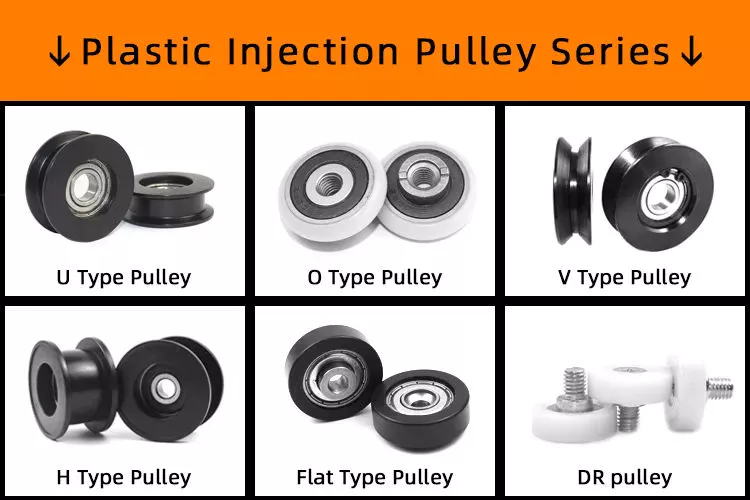
Types of pulleys
There are several types of pulleys. V-belt pulleys are the type commonly used in vehicles and electric motors. “V” pulleys require a “V” belt, and some even have multiple V grooves. “V” pulleys are often used in heavy duty applications for power transmission because they reduce the risk of power slippage.
Composite pulleys combine the properties of fixed and movable pulleys. Compound pulleys are able to change the direction of force while requiring relatively low force to move even the heaviest loads. Mechanical advantage is a measure of the effectiveness of a machine or equipment. It can be divided into 3 categories: force, distance and mechanics. Once you understand how each type works, you can design complex machines.
Fixed pulleys: These pulleys are the most basic type of pulleys. They use ropes and slotted wheels to move with the lifted object. Because they are so simple to set up, lifting heavy objects is a breeze. Although the moving object feels light, it is actually heavier than it actually is. These pulleys are used in construction cranes, utility elevators and many different industries.
Compound Pulley System: A pulley pulley is a combination of 2 fixed pulleys and 1 movable pulley. Compound pulley systems are effective for moving heavy objects because they have the largest force multipliers and are flexible enough to change the direction of the force as needed. Composite pulley systems are commonly used in rock climbing, theater curtains and sailing. If you’re looking for a pulley system, you can start by evaluating the types of pulleys and their uses.
Construction Pulleys: These are the most basic types of pulleys and have wheel rails. These pulleys can be lifted to great heights and attached to chains or ropes. They allow workers to access equipment or materials from greater heights. They are usually mounted on wheels with axles and secured with ropes. They are essential tools for construction workers. There are many different types of pulleys out there.
energy source
Belts and pulleys are mechanical devices used to transmit energy and rotational motion. The belt is connected to the rotating part of the energy source, and the pulley is mounted on the other. One pulley transmits power to the other, while the other changes the direction of the force. Many devices use this combination, including automobiles, stationary generators, and winches. It is used in many home applications, from conveyors to treadmills. Pulleys are also used for curtains in theater halls.
Pulley systems are an essential part of modern industry and everyday life. Pulleys are used in elevators, construction sites and fitness equipment. They are also used in belt-driven generators as backup power. Despite their simple and seemingly humble beginnings, they have become a versatile tool. From lifting heavy objects to guiding wind turbines, pulley systems are widely used in our daily lives.
The main reason why pulleys are so popular is the mechanical advantage they offer. They can lift a lot of weight by applying very little force over longer distances. For example, a small motor can pull 10 meters of cable, while a large motor can pull 1 meter. Also, the work done is equal to the force times the distance traveled, so the energy delivered to the large motor is the same.
The power source for the pulley system can be cables, belts or ropes. The drive element in a pulley system is usually a rope or cable. A belt is a loop of flexible material that transmits motion from 1 pulley to another. The belt is attached to the shaft and a groove is cut in the pulley. The belt then transfers energy from 1 pulley to the other through the system.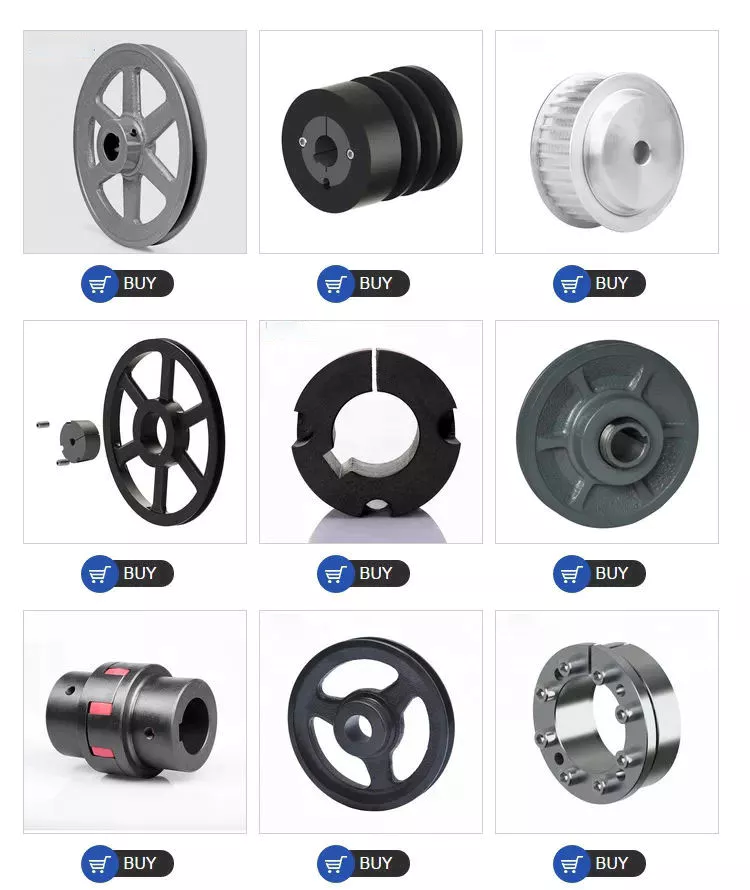
application
A pulley is a mechanical device used to lift heavy objects. They reduce the amount of work required to lift heavy objects and are an excellent choice for many applications. There are several different applications for pulleys, including elevators, grinders, planters, ladder extensions, and mountaineering or rock climbing. Let’s take a look at some of the most popular uses for pulleys in modern society. These include:-
A pulley is a mechanical device that changes force. To use, you wrap the rope around it and pull down to lift the object. While this device is very useful, a major limitation of using pulleys is that you still have to apply the same force to lift the object as you would without the pulleys. This is why people use pulleys to move large objects like furniture and cars.
In addition to lifting heavy objects, pulleys are used in elevators, flagpoles and wells. These systems allow people to move heavy objects without straining their backs. Many other examples of pulleys in the home include garage doors, flagpoles, and elevators. They also help raise and lower flagpoles, which can reach several stories high.
There are 2 basic types of pulleys: movable and fixed. Fixed pulleys are attached to a ceiling or other object using 2 ropes. Modern elevators and construction cranes use movable pulleys, as do some weight machines in gyms. Composite pulleys combine movable and fixed pulleys to minimize the force required to move heavy objects.
Another type of fixed pulley is the flagpole. A flagpole can support a country, organization, or anything else that needs to be lifted. A taller flagpole creates a prouder moment for those who support it. The operation of the rope and pulley mechanism is very simple. The user simply attaches the flag to the rope, pulls the pulley, and he or she can watch the flag rise and unfold.

